The David Farrell Story: Finding Home in the Pages
The compelling story of David Farrell is one of profound change, personal sacrifice, and the eventual triumph of forging a vibrant new life in New Zealand.
Farrell's journey—leaving South Africa and settling in Cambridge, NZ—is not just his personal history, but the deeply human experience he encapsulates in his celebrated book series. He often finds it easiest to share the essence of what his family endured, sacrificed, and ultimately benefitted from through his writing, acknowledging that the books truly capture this intense period of transition.
In 2009, Farrell and his family took the momentous step of leaving Germiston, South Africa. This "wrench of leaving our home country" served as the central catalyst for his writing career. After an initial phase writing short stories for prominent South African magazines like You, Huisgenoot, and Drum, Farrell committed himself to documenting the emigration experience through his novels. The effort and upheaval were ultimately worthwhile, as his children, who joined the family in New Zealand at different times, have all established themselves with homes, good jobs, and, most importantly, the freedom to choose their paths in life.
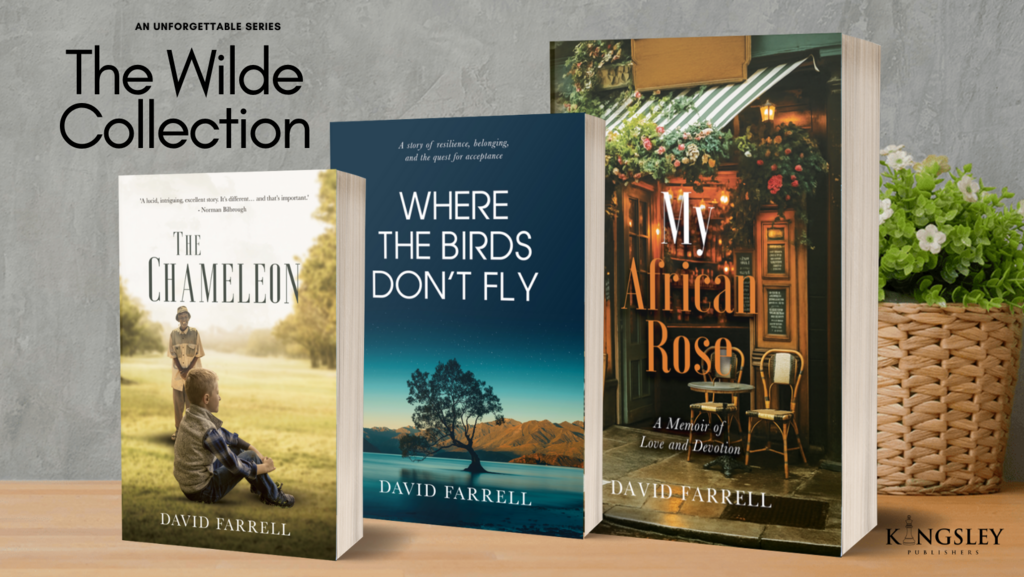
Farrell’s novels trace the narrative arc of the Wilde family, mirroring his own journey. The first book, Chameleon, explores the initial early days of life in New Zealand, setting the stage for the dramatic migration. The second, Where the Birds Don't Fly, directly addresses the arrival and immersion in a new culture, while a third book delves into a time of pivotal change in South Africa during the 1990s.
Exploring the Immigrant Heart in Where the Birds Don't Fly
Where the Birds Don't Fly is a poignant continuation of the Wilde family saga, focusing on their journey to start afresh in New Zealand. Reviewers have highlighted Farrell's remarkable storytelling and profound insights into the immigrant experience, crafting a narrative that resonates with both universal truths and intense personal struggles. The novel immediately plunges readers into the disorienting reality of upheaval, vividly capturing the obstacles involved in navigating a new land’s customs, idioms, and cultural nuances.
Farrell’s true strength lies in his ability to mine the depths of the human experience, peeling back the layers of what it means to start over and forge a sense of belonging in a place that is at once foreign and achingly familiar. The Wildes' quest for acceptance becomes a powerful meditation on resilience as they confront the harsh realities of being ‘othered’ and resist the seductive urge to retreat into insular communities.
The novel is rich with compelling, nuanced characters, rendered with deep empathy. A particular highlight is the deep bond that develops between the main character, Rory, and his Māori connection, Tāne, as the two men uncover shared histories of colonisation and grapple with the complex legacies of immigration on indigenous populations. Their relationship serves as a potent reminder that the search for belonging is a universal human yearning that transcends borders and cultures. Beneath the storyline, the emotional resonance is elevated by Farrell's well-chosen prose, which captures the inherent poetry hard-baked into the New Zealand landscape. His descriptions of the country’s flightless bird species are particularly evocative, functioning as a poignant metaphor for the Wildes' own quest for refuge and freedom.
Ultimately, Where the Birds Don't Fly stands as a powerful testament to the human capacity for resilience and adaptation. Farrell’s exploration of the challenges faced by immigrants and marginalised communities is tempered by an abiding sense of hope—a belief that connection and understanding are always within reach. With its nuanced character portraits, richly atmospheric settings, and profound emotional depths, this novel cements Farrell's status as a writer of rare talent, inviting us to embark on an unmatched journey of self-discovery that affirms the unifying power of our shared humanity.